

Who we are
We are the Fish Contamination Education Collaborative (FCEC)
Since 2003, we have worked to protect impacted communities in Southern California from the health risks of eating fish contaminated with dichlorodiphenyltrichloroethane (DDT) and polychlorinated biphenyls (PCBs) from the Palos Verdes Shelf Superfund site, one of the nation’s largest contaminated sediment sites. As part of the U.S. EPA’s Institutional Controls program, we collaborate with contaminant monitoring and enforcement efforts to minimize human exposure to fish contamination.
Through outreach to affected communities, anglers, and businesses, the FCEC provides education on the risks of consuming contaminated fish and guidelines for safe consumption and preparation methods.
The Palos Verdes Shelf
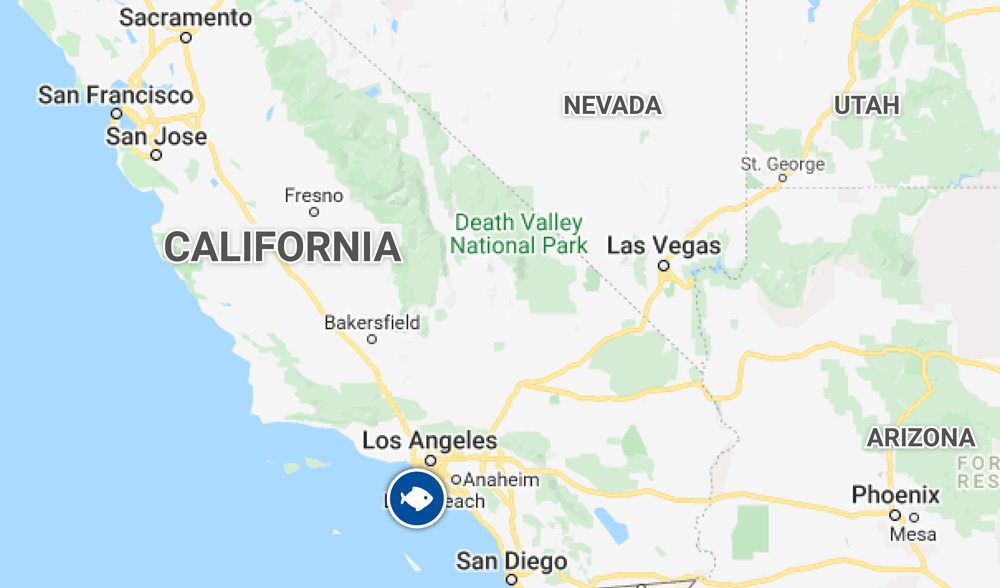
The Palos Verdes Shelf, located off the coast of Los Angeles, California, is among the largest contaminated sediment sites in the United States. The study area for this site encompasses roughly 34 square miles.
History
The Palos Verdes Shelf is contaminated with DDT and PCBs from historic dumping of chemical waste by the Montrose Chemical Corporation and other industries that operated from the 1940s to the 1980s. These wastes were discharged into the ocean through the Los Angeles County sanitation sewer system.
Although these chemicals are no longer in use, they remain in ocean sediment on the Palos Verdes Shelf and build up in fish that live or feed there, making some species unsafe to eat. People who consume these contaminated fish may be exposed to harmful levels of DDT and PCHs and face a higher risk of serious health problems, including cancer.
The U.S. EPA established the Fish Contamination Education Collaborative to reduce exposure risks for anglers, their families, and impacted communities who consume fish from the area through education on safer fishing and fish consumption practices.
1947-1982
BACKGROUND
The Montrose Chemical Corporation manufactures DDT at a plant in Los Angeles.
1953-1971
CONTAMINATION
About 1,100 tons of DDT are released onto the Palos Verdes Shelf during plant operations. That’s the weight of about 200 school busses. Other industries in Los Angeles release PCBs in the area at the same time.
1972
DDT BAN
The EPA issues an order making the use of DDT illegal in the United States.
1985
INTERIM FISH ADVISORY
High levels of DDT and PCBs are found in white croaker in the Palos Verdes Shelf area. The state of California issues a short-term “do not eat” consumption advisory for white croaker and recommends limited consumption of several other fish species caught in the area.
1989
NPL SITE LISTING
The EPA adds Montrose’s 13-acre site, including the Palos Verdes Shelf, to the Superfund program’s National Priorities List.
1990
WHITE CROAKER COMMERCIAL CATCH BAN
The California Department of Fish and Wildlife closes commercial fishing for white croaker at the Palos Verdes Shelf site and surrounding areas due to health risks posed by DDT and PCB contamination. Commercial fishing for other species continues.
1991
FINAL FISH ADVISORY
The state of California issues a final seafood consumption advisory for white croaker in the Palos Verdes Shelf area. This fish advisory is still in place today.
1994
SITE INVESTIGATION
The U.S. Geological Survey finds that 17 square miles of the Palos Verdes Shelf had high levels of DDT and PCBs in ocean floor sediments.
1996
SITE INVESTIGATION
The EPA leads a non-time critical investigation at the Palos Verdes Shelf site to evaluate risks posed by DDT and PCB contaminated ocean floor sediments and determines potential response actions that could reduce exposure to humans and the environment.
1998
WHITE CROAKER BAG LIMIT
The California Department of Fish and Wildlife sets a daily bag limit of 10 white croaker for recreational anglers in the Palos Verdes Shelf area.
1999
HUMAN HEALTH RISK ASSESSMENT
The EPA issues a Human Health Risk Assessment and determines that eating fish caught from the Palos Verdes Shelf poses a health risk due to high levels of DDT and PCBs.
2000
PILOT CAPPING STUDY
The EPA conducts a pilot capping study on a small portion of the Palos Verdes Shelf to evaluate capping methods and long-term impact of cap placement.
2001
ACTION MEMORANDUM
The EPA issues the Action Memorandum that begins implementation of the Institutional Controls Program to address health risks associated with eating contaminated fish caught from the Palos Verdes Shelf.
2002 (ongoing)
MONITORING PROGRAM
The EPA and the Montrose Settlements Restoration Program start a monitoring program for fish in the coastal area of southern California. It finds that DDT and PCB levels are higher in fish caught in the Palos Verdes Shelf and San Pedro Bay areas.
2003 (ongoing)
FISH CONTAMINATION EDUCATION COLLABORATIVE
The EPA starts extensive public outreach and education efforts as part of the Fish Contamination Education Collaborative.
2004
INSTITUTIONAL CONTROLS
The EPA and its key stakeholders carry out strategic planning and implementation of the Palos Verdes Shelf Institutional Controls Program, including public outreach and education efforts, fish monitoring in markets and ocean, and enforcement of white croaker commercial fishing ban and catch limit. The program is still active today.
2008
REMEDIAL INVESTIGATION
The EPA reports information on the nature and extent of DDT and PCBs in contaminated sediment and assesses the risks to human health and the environment.
2009
INTERIM RECORD OF DECISION
The EPA selects an interim cleanup remedy for the Palos Verdes Shelf site. It includes capping, monitored natural recovery, and institutional controls.
2009
FEASIBILITY STUDY
The EPA produces a Feasibility Study that describes the development, evaluation and comparison of cleanup action alternatives to manage the contaminated sediment.
2018
FIRST MONITORED NATURAL RECOVERY REPORT
The EPA analyzes data from the site’s first Monitored Natural Recovery Report (2013- 2016). The study finds that concentrations of DDT and PCBs have decreased to post-capping objectives and the interim remedy may no longer be effective for the site. The EPA suspends the capping part of the site’s interim cleanup plan.
2024
SECOND MONITORED NATURAL RECOVERY REPORT
The EPA samples fish tissue, sediment and water in the Palos Verdes Shelf area. The results show that DDT and PCB levels in sediment have generally decreased over time. DDT and PCB levels in white croaker remain above risk-based cleanup levels.
2024
THIRD FIVE-YEAR REVIEW REPORT
The EPA conducts the third Five-Year Review for the site to determine if the interim remedy is protective of human health and the environment while a final remedy is developed.
2025
COMMUNITY INVOLVEMENT PLAN
The EPA seeks input from the community on how to best engage with those affected by the site.
2026
HUMAN HEALTH AND ECOLOGICAL RISK ASSESSMENT
The EPA conducts an updated human health and ecological risk assessment to understand current health risks.
FUTURE
FEASIBILITY STUDY AND PROPOSED PLAN
This will reevaluate cleanup alternatives for the site. Once this is complete, the EPA will select the preferred remedy and include it in the proposed plan for public comment.
FUTURE
FINAL RECORD OF DECISION
Documentation and description of the selected remedy.
FUTURE
REMEDIAL DESIGN
The EPA works with the state and local stakeholders on technical specifications for cleanup remedies and technologies.
FUTURE
REMEDIAL ACTION
This step involves the actual construction or implementation of the cleanup.
FUTURE
OPERATIONS AND MAINTENANCE
This ensures that the cleanup actions will protect human health and the environment over the long term. Activities may include routine maintenance at a site, such as making sure signs are intact, or soil treatment systems are running smoothly.
FUTURE
NPL DELETION
The final stage of the Superfund process. The EPA may delete a site from the NPL if the Agency determines no further response is required to protect human health or the environment.